Rancho Cucamonga sits at the base of the San Gabriel Mountains, where the alluvial fans have deposited layers of silty sand, gravel, and scattered cobbles across the valley floor. With a population approaching 180,000 and a location right on the edge of the Cucamonga Fault zone, any deep excavation here needs to account for both complex stratigraphy and elevated seismic hazard. We routinely specify active and passive anchors for shoring walls where space is tight along Foothill Boulevard or Haven Avenue, ensuring that the load transfer bypasses the loose near-surface fills and reaches competent material at depth. Because the water table can be encountered anywhere from 15 to over 80 feet below grade depending on the season and proximity to Deer Creek, corrosion protection and grouting technique become non-negotiable parts of the design. In our experience, a CPT test run to refusal before finalizing the anchor bond zone saves a lot of guesswork when gravel lenses show up unannounced.
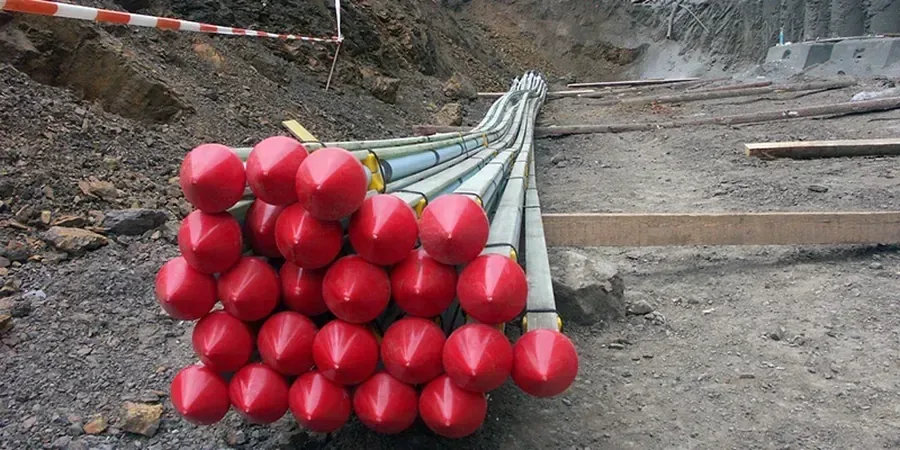
A properly bonded anchor in Rancho Cucamonga’s alluvium transfers load far beyond the active failure wedge, turning a shoring wall into a stable system even under seismic demand.
Scope of work
Area-specific notes
At an elevation of 1,200 feet and just a few miles from the San Andreas and Cucamonga fault systems, Rancho Cucamonga deals with a real seismic risk that directly impacts anchor design. A 6.5+ magnitude event can generate enough lateral spreading in the alluvial basin to unload passive anchors if the wall wasn't designed with enough embedment into non-liquefiable material. Even without liquefaction, the cyclic degradation of anchor capacity in sandy soils is something we address by limiting the design load to a fraction of the ultimate bond stress — typically 60 percent or less for temporary anchors during construction. Corrosion is another long-term risk: the semi-arid climate alternates between dry summers and brief intense winter rains, creating wet-dry cycles at the anchor head that can accelerate steel deterioration if the trumpet and cap aren't detailed correctly. And in the northern sections closer to the foothills, boulder fields within the alluvium can deflect a drill path, which is why we always include a contingency for re-drilling or adjusting the anchor location in the field.
Standards used
ASCE 7-22 Minimum Design Loads and Associated Criteria for Buildings and Other Structures, IBC 2024 Chapter 18 Soils and Foundations, ASTM A975 Standard Specification for Double-Twisted Hexagonal Mesh Gabions and Revet Mattresses (anchor testing protocols), PTI DC35.1 Recommendations for Prestressed Rock and Soil Anchors
Linked services
Active Anchor Design (Tiebacks)
Full design package including unbonded length calculation, bond zone sizing based on CPT or SPT data, grout specification, and lock-off load determination. We deliver stamped calculations and load test acceptance criteria.
Passive Anchor Systems (Soil Nails)
Design of grouted passive bars for top-down shoring in cut situations, including nail spacing, facing connection details, and pullout capacity verification against the local alluvial stratigraphy.
Load Testing and Verification
On-site performance testing, creep monitoring, and lift-off testing per ASTM and PTI standards. We provide real-time load-displacement curves and sign-off documentation for the building department.
Typical parameters
Common questions
What is the difference between an active and a passive anchor?
An active anchor is prestressed after installation; we apply a lock-off load that keeps the wall in compression against the soil mass. A passive anchor, like a soil nail, only develops tension when the ground moves — it relies on deformation to activate. In Rancho Cucamonga, we typically use active tiebacks for soldier pile walls where movement must be minimized next to existing structures, and passive nails for temporary cuts in open areas.
How much does anchor design cost for a project in Rancho Cucamonga?
For a typical retaining wall or shoring project, the anchor design package runs between US$1,070 and US$3,860 depending on the number of anchors, the complexity of the soil profile, and whether load testing is included. A small residential cut with four or five passive nails will be at the lower end, while a commercial tieback system with corrosion protection and multiple load tests falls at the upper end.
Do you handle the coring through the wall for tieback installation?
We specify the sleeve diameter, inclination, and location on the design drawings, but the actual coring and drilling is typically performed by the shoring subcontractor. Our team is on site during the first few installations to verify that the drill is hitting the expected strata at the designed depth and to adjust the bond length if the ground conditions differ from the geotechnical baseline report.
How do you verify that an active anchor will hold its load over time?
We run a series of performance tests: a proof test to 133% of the design load for each anchor, and at least one extended creep test on a sacrificial anchor. During the creep test we hold the load for 60 minutes and measure displacement every minute — the acceptance criterion is typically less than 2 mm of creep in the final 30 minutes. After lock-off, we can also install load cells on critical anchors for long-term monitoring.