In Rancho Cucamonga, laboratory soil testing underpins geotechnical design by aligning with ASTM D422, D4318, and California Building Code Chapter 18 requirements. The region’s alluvial fans and decomposed granite near the San Gabriel foothills demand precise physical characterization to predict settlement, drainage, and slope stability. Our grain size analysis (sieve + hydrometer) quantifies the full particle distribution, while Atterberg limits define plasticity ranges critical for expansive clay identification in the Cucamonga Basin.
These tests serve foundation engineering for residential subdivisions, retaining walls, and commercial pads on collapsible or liquefiable soils. For pavement design and septic infiltration studies, we pair classification with hydrometer-based fines assessment to meet local Public Works permeability thresholds. Every report delivers lab data formatted for geotechnical review in Rancho Cucamonga’s plan-check process.
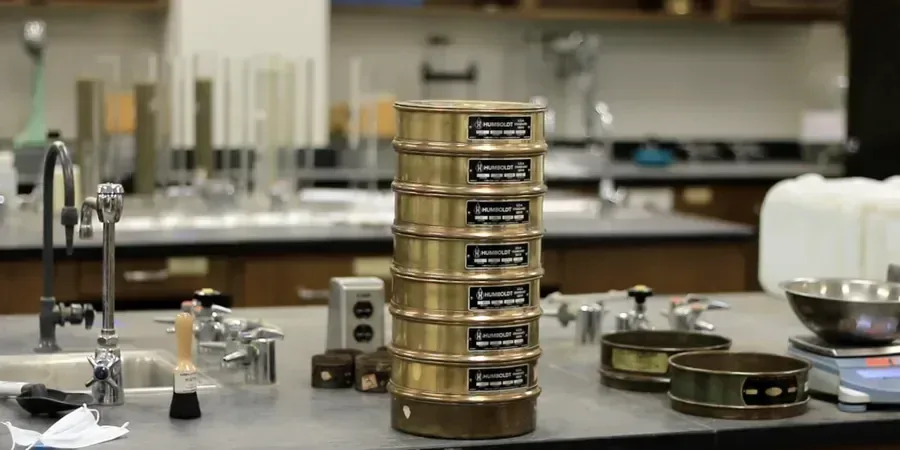
Accurate laboratory testing forms the backbone of reliable geotechnical engineering in Rancho Cucamonga, where the complex alluvial fan deposits and weathered granitic bedrock of the Cucamonga Plain demand precise material characterization. Our laboratory services provide the critical link between field exploration and foundation design, quantifying index and engineering properties of soils and rock in strict accordance with local jurisdictional requirements and the California Building Code. These analyses are essential for evaluating the expansive potential of the region’s clay-rich soils, the collapsible nature of young alluvium, and the strength of compacted fill, directly supporting our comprehensive geotechnical investigation programs.
Our testing protocols adhere rigorously to ASTM International and Caltrans standards, the governing benchmarks for geotechnical work in the United States. Classification testing relies on grain size analysis using mechanical sieves and hydrometers (ASTM D422/D6913) to determine the full particle-size distribution, coupled with Atterberg limits testing (ASTM D4318) to define the plasticity characteristics that control a soil’s shrink-swell behavior. For strength and consolidation, we perform direct shear (ASTM D3080), unconfined compression (ASTM D2166), and one-dimensional consolidation tests (ASTM D2435), often on undisturbed samples obtained during our CPT (Cone Penetration Test) and drilling operations. These methods ensure every parameter, from effective friction angle to compression index, is defensible and ready for design application.
Typical projects in Rancho Cucamonga leverage this data for immediate construction needs. Residential developments in the foothills near the Etiwanda Preserve require swell-collapse testing to design post-tensioned slabs, while commercial projects in the Empire Lakes area depend on compaction curves and direct shear results for engineered fill and retaining wall design. Infrastructure work, such as pipeline alignments along Foothill Boulevard, relies on our laboratory-derived soil corrosivity and resistivity values. The data also validates field testing, as the maximum dry density and optimum moisture content from a laboratory Proctor (ASTM D1557) are indispensable benchmarks for our field density test (sand cone method) during earthwork quality assurance.
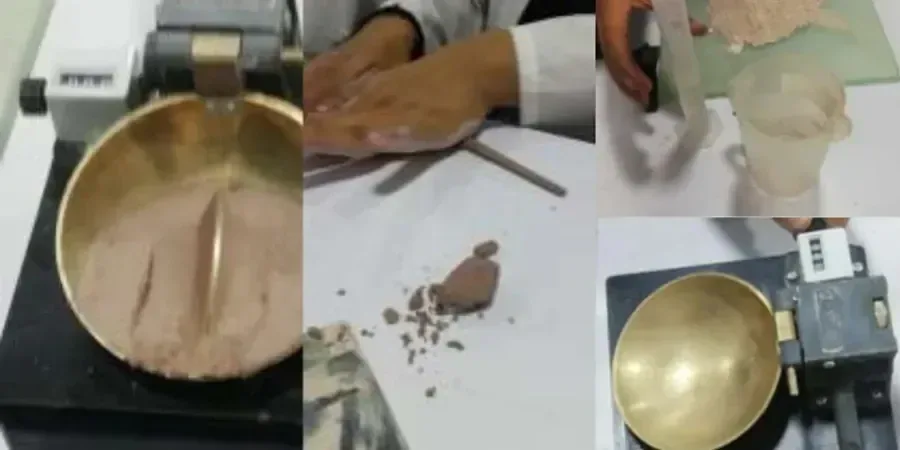
The process begins with the careful transport of jar and Shelby tube samples from the drill rig or test pit to our facility, maintaining chain-of-custody. After the agreed-upon test schedule, we deliver a geotechnical laboratory report containing tabulated results, graphical plots of grain-size curves and consolidation behavior, and a concise interpretation of the data’s engineering significance. The core value is risk reduction: by replacing assumed textbook values with site-specific parameters, we provide project owners and structural engineers the certainty needed to optimize foundation designs, mitigate geologic hazards, and satisfy the strict plan-check requirements of the City of Rancho Cucamonga’s Building and Safety Division.