In Rancho Cucamonga, subsurface investigation begins with understanding the complex alluvial fan deposits and variable groundwater conditions shaped by the San Gabriel Mountains. Our geotechnical studies comply with CBC Chapter 18 and ASTM standards, using methods like CPT (Cone Penetration Test) to map stratigraphy and identify liquefaction-prone layers without generating soil cuttings. This direct-push technology provides continuous data on tip resistance and sleeve friction, essential for evaluating seismic settlement risk in this seismically active region.
Commercial developments, warehouse foundations, and public infrastructure projects rely on these investigations to meet City of Rancho Cucamonga grading permit requirements. The CPT test excels where traditional drilling is constrained by limited access or environmental sensitivity, delivering rapid, high-resolution profiles for shallow foundation design. Pairing field data with laboratory index testing ensures reliable bearing capacity and pavement design values for your project.
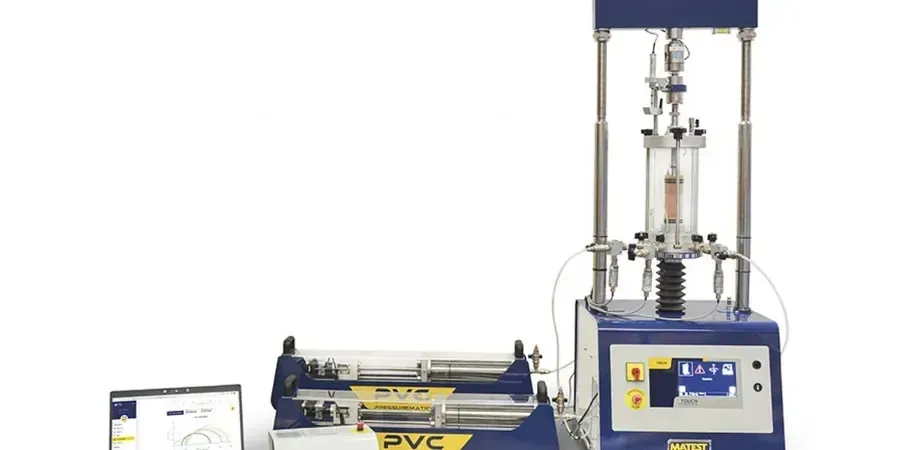
In Rancho Cucamonga, a comprehensive geotechnical investigation is the critical first step that defines the risk profile and design parameters for any construction project. Our investigative services cover the full spectrum of subsurface exploration, from initial desktop studies to advanced In-Situ and laboratory analysis, all calibrated to the unique geological setting at the base of the San Gabriel Mountains. The city’s underlying stratigraphy is dominated by young alluvial fan deposits, primarily composed of interbedded sands, gravels, silts, and clays washed from the nearby canyons. This heterogeneous geology, combined with the region’s high seismic hazard from the Cucamonga Fault zone, demands strict adherence to the California Building Code (CBC) and local Rancho Cucamonga municipal ordinances. A properly scoped investigation must explicitly assess liquefaction potential, seismic settlement, and expansive soil behavior, which are all common challenges in this specific Inland Empire locale.
Our field methodology is built upon a systematic approach using standards set by ASTM International and the American Society of Civil Engineers (ASCE). An investigation typically begins with hollow-stem auger drilling to obtain disturbed and relatively undisturbed samples, allowing us to log the soil profile and select critical strata for detailed testing. The backbone of our stratigraphic characterization is the Cone Penetration Test (CPT), an ASTM D5778-compliant method that provides a continuous, high-resolution record of tip resistance, sleeve friction, and pore pressure. This is routinely paired with In-Situ to verify soil density directly in the ground. For engineered fill and utility trench backfill verification, we perform the field density test using the sand cone method per ASTM D1556, ensuring compaction meets the 90-95% relative density requirements specified in local grading ordinances, a non-negotiable standard for structural support in this seismically active area.
Typical projects across Rancho Cucamonga—from master-planned residential communities in the foothills and commercial developments along Foothill Boulevard to critical infrastructure like the I-15 corridor improvements—present distinct geotechnical challenges that our investigations must address. For large distribution centers and industrial tilt-up structures common in the southern part of the city, we focus heavily on quantifying post-construction settlement and designing shallow foundations that can tolerate the expansive near-surface clays. In hillside areas, our investigations are crucial for evaluating deep-seated landslide stability and providing recommendations for deep foundations where cut-fill transitions are planned. This project-specific data directly informs our foundations analysis, where we synthesize field and lab data to deliver value-engineered recommendations for shallow footings, post-tensioned slabs, or deep drilled piers, always considering the CBC Chapter 18 requirements for seismic design category D.
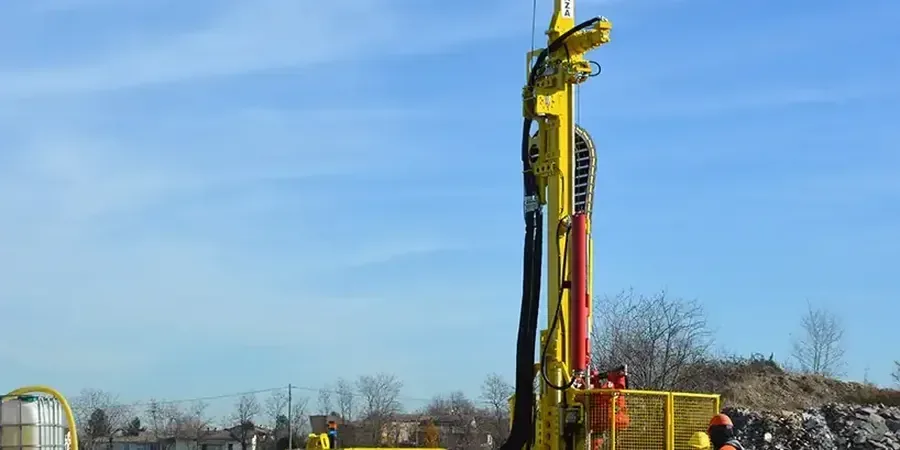
A conclusive geotechnical investigation progresses through a transparent process, culminating in a report that serves as a contract document for earthwork and construction. After the field program, soil samples are transported to our laboratory for a suite of index and performance tests. This includes grain size analysis using combined sieve and hydrometer methods (ASTM D422) to classify the soils via the Unified Soil Classification System (USCS), and Atterberg limits testing (ASTM D4318) to precisely define the plasticity characteristics that control shrink-swell potential. The final deliverable is not just a data log but a rigorous interpretation that provides allowable bearing pressures, passive earth pressure coefficients, pavement design parameters, and explicit mitigation measures for seismic and geologic hazards, ensuring your project in Rancho