Slopes in Rancho Cucamonga demand careful evaluation due to the city’s position against the alluvial fans and steep terrain of the San Gabriel Mountains. Local geology, including weathered granitic soils and colluvium, creates conditions where even moderate cuts or natural inclines can fail under seismic loads or heavy rain. We address these challenges through rigorous slope stability analysis that follows California Building Code Chapter 18 and local grading ordinances, paired with active/passive anchor design to secure unstable masses before they threaten adjacent structures.
Residential hillside developments, roadway widening along the 210 corridor, and commercial pads cut into foothill terrain routinely require engineered slope reinforcement. Our retaining wall design integrates drainage and tieback systems to manage lateral earth pressures while respecting Rancho Cucamonga’s strict hillside overlay standards. Every solution balances long-term durability with the site’s natural drainage patterns.
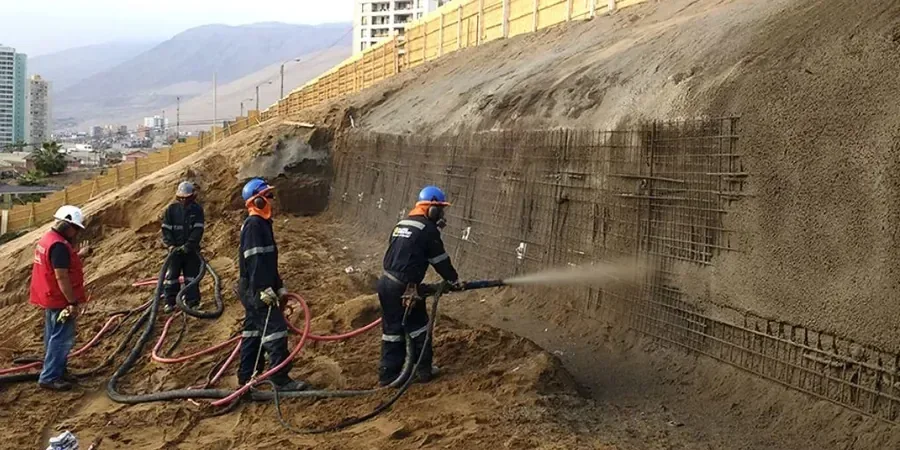
Stability of natural and engineered slopes in Rancho Cucamonga demands rigorous geotechnical evaluation, given the city’s position at the base of the San Gabriel Mountains and its complex alluvial fan geology. Our slope services address everything from ancient landslide deposits and weathered granitic bedrock to young debris flows, operating under the City of Rancho Cucamonga Municipal Code Chapter 15.04 and the California Building Code (CBC) Chapter 18. A proper slope investigation begins with a thorough geotechnical investigation that defines soil stratigraphy, groundwater conditions, and the shear strength parameters critical for both static and seismic stability analyses.
We execute field exploration using advanced in‑situ methods that meet ASTM standards and local jurisdictional expectations. The Cone Penetration Test (CPT) provides continuous profiling of tip resistance, sleeve friction, and pore pressure, which is especially useful for identifying weak clay seams and liquefiable layers within alluvial deposits. Complementary in‑situ testing and field density tests using the sand cone method verify compaction levels in engineered fill slopes, while our laboratory program quantifies strength and deformation behavior. Grain size analysis by sieve and hydrometer and Atterberg limits are standard for classifying soils according to the Unified Soil Classification System (USCS) and assessing their drainage and plasticity characteristics, both of which govern slope performance.
Typical projects in Rancho Cucamonga range from hillside residential developments in the Etiwanda and Alta Loma areas to commercial pad grading and remedial stabilization of surficial failures along transportation corridors. For new construction, we analyze cut and fill configurations to achieve minimum factors of safety of 1.5 under static conditions and 1.1 under the design seismic event per CBC Section 1803.5. For distressed slopes, our investigation pinpoints failure planes and pore‑pressure triggers, enabling targeted repair designs such as subsurface drainage systems, soil nail walls, or regrading. Every slope evaluation also integrates foundation considerations, and our foundations team collaborates to ensure that structures set back from slope crests or placed on engineered fill perform reliably over the long term.
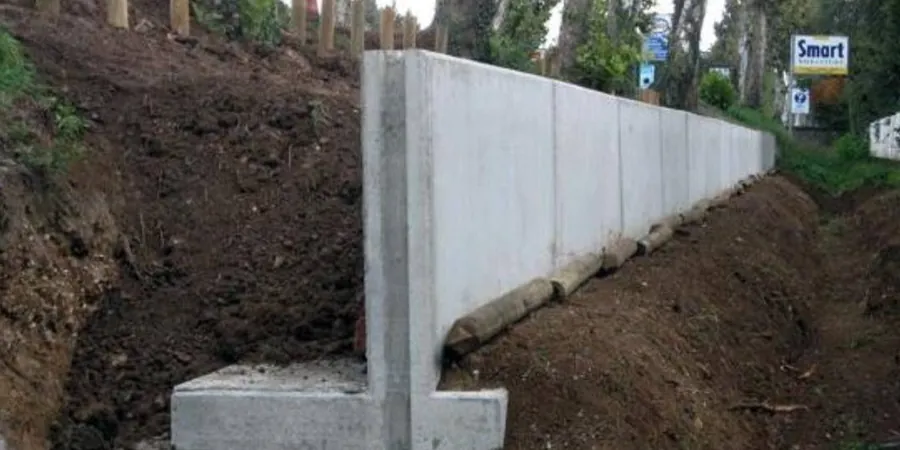
The slope stability process moves from desktop review and field mapping through intrusive exploration, laboratory testing, and limit‑equilibrium or finite‑element modeling. Deliverables include a geotechnical data report with boring logs, CPT profiles, laboratory results, and a design‑level report containing cross sections, stability calculations, and earthwork specifications. We present actionable recommendations for slope geometry, compaction requirements, drainage provisions, and reinforcement if needed. By combining local geologic insight with ASTM‑ and CBC‑compliant methods, we give developers, civil engineers, and public agencies in Rancho Cucamonga the technical clarity required to manage slope risk efficiently and keep projects on schedule.