Rancho Cucamonga sits atop a vast coalescing alluvial fan system deposited by streams descending from the San Gabriel Mountains. This geological setting, combined with the city's position along the base of the Cucamonga Fault zone, creates a subsurface dominated by loose, granular deposits that pose significant seismic settlement risks. The rapid suburban expansion eastward from the historic Route 66 corridor has placed thousands of structures on soils requiring rigorous Improvement. Vibrocompaction design becomes the primary engineering control for densifying these naturally deposited sands and gravels before foundation loads are applied. The design process relies on correlations between SPT drilling data and target relative density to define probe spacing and treatment depth. On projects where the water table sits deep—common in the northern terraces near the foothills—the energy propagation differs markedly from saturated sites, demanding a tailored approach to achieving uniform compaction throughout the treatment zone.
Targeting 70% relative density in Rancho Cucamonga's alluvial sands requires grid spacing calibrated to grain-size distribution, not generic tables.
Scope of work
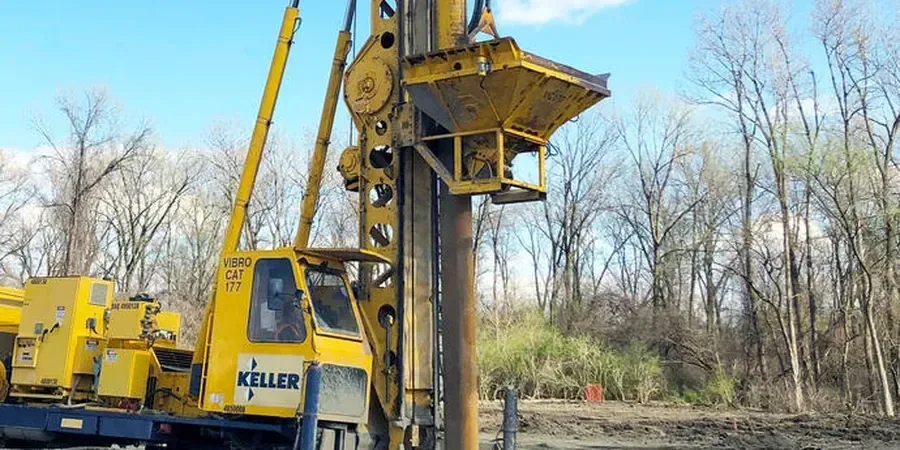
Area-specific notes
A common mistake is specifying vibrocompaction on soils with more than 15% silt without first reviewing the plasticity index. In Rancho Cucamonga's transition zones between alluvial fan channels, fine-grained interbeds inhibit radial drainage and prevent effective compaction. The vibrator energy dissipates through pore pressure instead of rearranging sand grains. The result is a treated zone that looks uniform on a CPT log but settles significantly under load once excess pore pressures dissipate weeks later. Another failure mode involves under-treating the upper 5 feet. The low confining stress near the surface reduces compaction effectiveness, leaving a crust that requires supplemental rolling or a surcharge program. The design must explicitly address this shallow layer. Ignoring the groundwater table fluctuation between dry and wet years also skews the energy calibration. A winter season with heavy rainfall can raise the water table into the treatment zone, completely altering the vibrator's influence radius. The design documents must specify a contingency for seasonal water level changes based on historical monitoring data.
Standards used
ASCE 7-22 Minimum Design Loads and Associated Criteria for Buildings and Other Structures, ASTM D1586-18 Standard Test Method for Standard Penetration Test (SPT), ASTM D2487-17 Standard Practice for Classification of Soils for Engineering Purposes, IBC 2024 Section 1805 Improvement
Linked services
Design grid and depth specification
Triangular grid layout with probe spacing between 6 and 10 feet based on gradation and target density. Depth extends to the liquefiable layer base identified in the geotechnical report.
Energy and frequency calibration
Calibration of vibrator frequency and amperage to the site's grain-size curve. Includes energy curves for both dry and saturated conditions.
Pre-treatment test section program
Design and supervision of a test section to validate spacing, energy, and duration before full-scale production. Includes CPT before and after.
Post-treatment verification plan
CPT soundings on a grid tighter than the treatment grid. Statistical analysis of tip resistance and friction ratio to confirm uniformity and target density.
Typical parameters
Common questions
How deep can vibrocompaction treat in Rancho Cucamonga's alluvial soils?
Standard depth vibrators reach 40 feet without extension leads. The alluvial deposits in Rancho Cucamonga often extend to 100 feet, but treatment below 40 feet requires specialized deep vibrator setups and becomes less cost-effective. The design must balance treatment depth against the liquefiable zone thickness identified in the site-specific seismic hazard analysis. Most commercial and industrial projects target the upper 25 to 30 feet where N-values are critically low.
What fines content makes vibrocompaction ineffective?
Vibrocompaction works by rearranging grain-to-grain contacts through vibration. When the fines content—silt and clay passing the #200 sieve—exceeds 12 to 15%, these fine particles dampen the vibratory energy and block drainage. The method loses efficiency rapidly above this threshold. The design requires a grain-size analysis from the grain-size laboratory to confirm suitability before committing to the treatment approach.
What does a vibrocompaction design package cost for a Rancho Cucamonga project?
A complete vibrocompaction design package, including grid layout, energy calibration, test section planning, and verification protocol, ranges from US$1,440 to US$4,700 depending on the treatment area size and the number of design iterations required. The price reflects the engineering hours for interpreting site data and producing stamped design documents compliant with IBC 2024 and local jurisdiction requirements.
How is treatment depth verified after vibrocompaction?
Post-treatment verification uses CPT soundings performed on a grid tighter than the treatment spacing. Cone tip resistance and friction ratio are compared against pre-treatment baselines at each depth increment. The design specifies acceptance criteria based on a minimum tip resistance correlated to the target relative density. Statistical methods confirm uniformity across the site. In specific cases, SPT borings provide additional confirmation at selected locations.