We've seen it too many times. A grading contractor in Rancho Cucamonga drills a few borings near the 210, hits coarse gravel in the Cucamonga alluvial fan, and assumes the whole site is consistent. Then the mat foundation starts differential settlement because a buried channel of fine silt was missed between the SPT intervals. That's the limitation of discrete sampling. The Cone Penetration Test gives you a continuous profile every 2 centimeters. No gaps. No missed layers. When you're dealing with the heterogeneous debris-flow deposits that characterize this part of the Inland Empire, the resolution matters. Our team runs ASTM D5778-compliant CPT soundings with pore pressure measurement, and the data integrates directly into liquefaction assessments under IBC Chapter 18. Before committing to a foundation scheme, we often recommend pairing the CPT with a seismic refraction survey to map the depth to bedrock across the site, especially where the alluvium thins against the San Gabriel foothills.
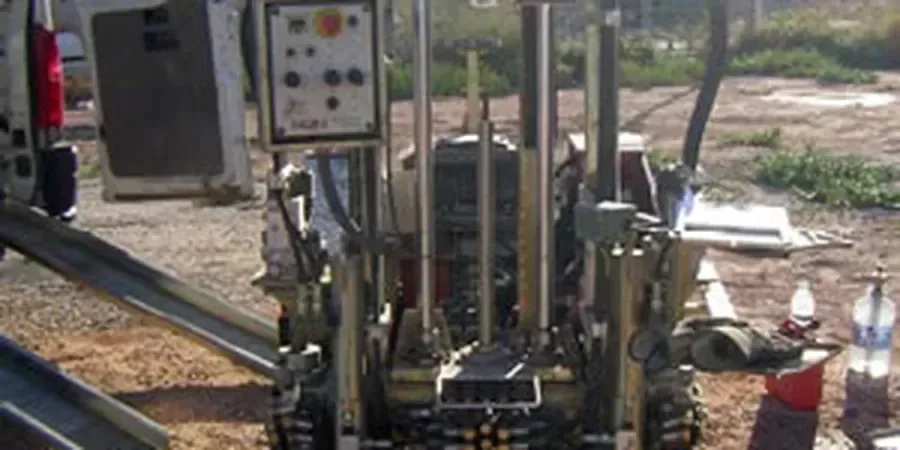
In the alluvial fan environment of Rancho Cucamonga, a 2-centimeter sampling interval reveals the thin silt layers that control liquefaction and settlement behavior.
Scope of work
Area-specific notes
Rancho Cucamonga sits at 1,207 feet elevation on a sloping alluvial plain that drains the San Gabriel Mountains. The 2008 Chino Hills earthquake (M5.4) shook the city hard enough to crack masonry in Alta Loma, and USGS ShakeMap data showed amplified ground motion in the softer basin sediments. The state hazard map classifies significant tracts along Foothill Boulevard as liquefaction-susceptible. When you rely on standard penetration testing alone, you might log a sand layer as 'medium dense' but miss a 4-inch silt seam that will trap pore water and trigger a flow slide under cyclic loading. The CPT's continuous pore pressure record catches those seams. We run CPT-based liquefaction analysis using the Robertson-Wride method and the NCEER procedure, then output post-liquefaction settlement profiles. For critical infrastructure like the water treatment plants near the Santa Ana River, we combine CPT soundings with liquefaction mitigation design early in the schematic phase, before the structural loads are locked in.
Standards used
ASTM D5778-20: Standard Test Method for Electronic Friction Cone and Piezocone Penetration Testing of Soils, IBC 2021 Chapter 18: Soils and Foundations, Robertson & Wride (1998): Soil behavior type classification, NCEER (2001): Liquefaction resistance of soils from CPT
Linked services
Standard CPT Soundings
20-ton truck-mounted system pushing to refusal or 100 ft. Continuous qc, fs, and u2 data with real-time digital display. Typical production: 4-6 soundings per day.
Piezocone with Dissipation Testing
CPTu with pore pressure decay measurements at target depths. Determines in-situ hydraulic conductivity and consolidation characteristics. Essential for settlement rate estimates.
Liquefaction Analysis Package
CPT-based liquefaction triggering and post-liquefaction settlement analysis using Robertson-Wride and NCEER methods. Includes cyclic resistance ratio profiles and factor of safety maps.
Typical parameters
Common questions
What does a CPT test cost in Rancho Cucamonga?
For sites in Rancho Cucamonga, standard CPT soundings typically range from US$170 to US$240 per linear foot, depending on depth, access conditions, and whether pore pressure measurement is included. A typical commercial project with 4 soundings to 50 feet will run US$8,500 to US$12,000 total. Mobilization within the Inland Empire is generally included for projects over US$5,000.
How deep can you push the cone in Rancho Cucamonga soils?
In the alluvial fan deposits typical of Rancho Cucamonga, we routinely reach 60 to 80 feet before hitting refusal on dense gravel or cobbles. Near the mountain front in Alta Loma, refusal can occur shallower—sometimes at 30 to 40 feet—where debris-flow deposits contain large boulders. We always specify a 20-ton reaction system to maximize penetration depth.
Do I still need borings if I run CPT?
CPT provides continuous soil behavior type classification, but it does not recover physical samples. For most projects in Rancho Cucamonga, we recommend combining CPT with one or two targeted SPT borings to calibrate the soil classification and collect samples for lab testing. The California Building Code still requires physical samples for certain laboratory tests, so the two methods work together rather than replacing each other.