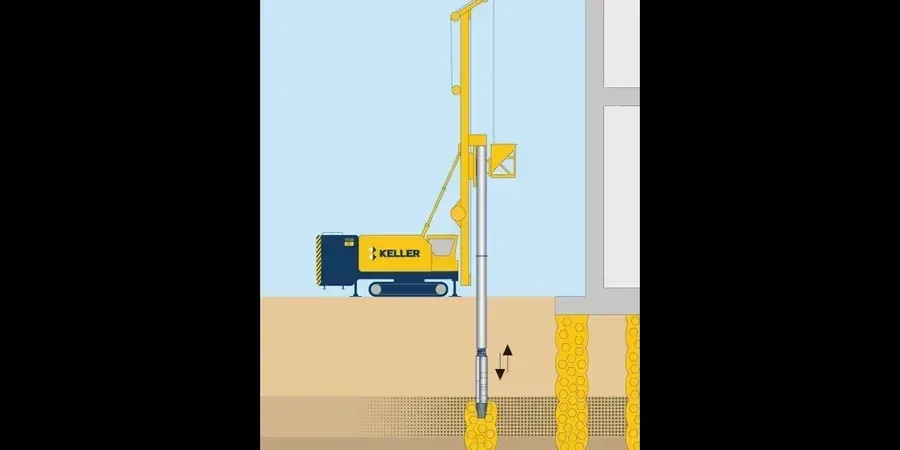
In Rancho Cucamonga, Improvement addresses the challenges posed by alluvial fan deposits and liquefiable sands common to the Inland Empire. Local geotechnical practice follows IBC Chapter 18 and Caltrans standards, requiring reliable densification for seismic resilience. Our category covers design-phase solutions that transform poor soils into competent bearing strata, with specialized focus on stone column design for reinforcing soft clays and silts, and vibrocompaction design to densify granular soils susceptible to settlement during a design earthquake.
These methods serve warehouse logistics centers, distribution hubs, and commercial developments where shallow foundations demand uniform support. We additionally integrate verification testing protocols that confirm performance criteria before structural loads are applied. For cohesive soils requiring drainage and reinforcement, our stone column solutions provide dual-function improvement, while vibrocompaction techniques achieve target relative density in sandy profiles across the Santa Ana River wash corridor.
Improvement in Rancho Cucamonga addresses the engineering challenges posed by the alluvial fan deposits and variable subsurface conditions characteristic of the San Bernardino Valley. Local geology consists predominantly of young alluvial sediments, including interbedded sands, silts, and gravels transported from the San Gabriel Mountains, often underlain by older, denser alluvium. These unconsolidated deposits can exhibit loose zones, potential for liquefaction, and differential settlement, demanding rigorous geotechnical characterization before any improvement strategy is selected. A comprehensive geotechnical investigation is the essential first step, integrating field exploration with cone penetration test (CPT) soundings to map stratigraphy and identify problematic layers.
Designing an effective Improvement program relies on established American standards, including those published by ASCE, FHWA, and the International Building Code as adopted by the City of Rancho Cucamonga. Methods such as vibro-compaction, dynamic compaction, stone columns, and compaction grouting are evaluated based on soil grain-size distribution and required performance criteria. Accurate classification is achieved through grain size analysis combining sieve and hydrometer methods, while Atterberg limits testing quantifies the plasticity of fine-grained soils, directly influencing the selection of wet or dry improvement techniques. During construction, quality control is verified using field density testing by the sand cone method, per ASTM D1556, alongside post-treatment CPT soundings to confirm that specified relative density or strength gains have been achieved.
Typical projects in Rancho Cucamonga requiring Improvement include warehouse distribution centers in the industrial corridors, residential subdivisions on gently sloping terraces, and commercial developments near the Foothill Boulevard corridor. For deep foundations supporting heavily loaded structures, Improvement often serves to densify the upper strata, increasing bearing capacity and allowing for a more efficient foundation design with shallow footings instead of deep piles. In areas with high liquefaction potential identified during In-Situ, improvement programs are implemented to mitigate seismic risk in accordance with CBC and ASCE 7 requirements, protecting critical infrastructure and ensuring long-term performance.
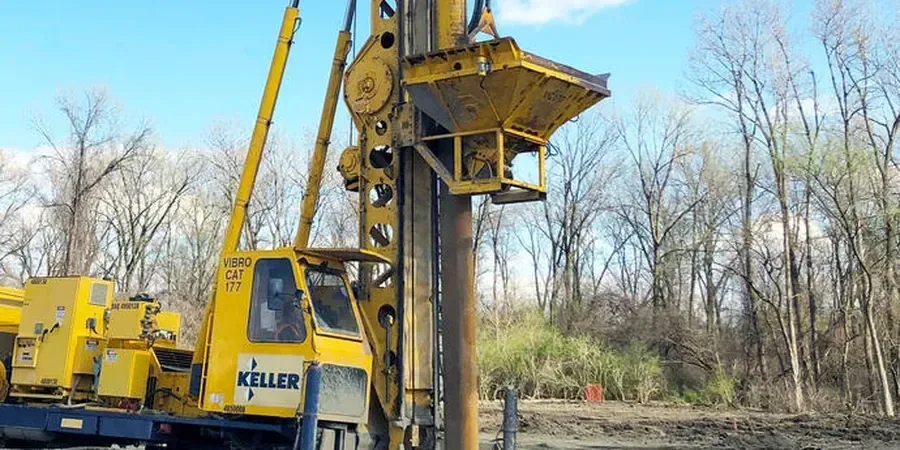
The Improvement process begins with a desktop review and subsurface exploration program, followed by laboratory testing to establish baseline parameters. Our team delivers a site-specific improvement plan detailing the selected methodology, performance specifications, and a rigorous field verification protocol. The final deliverable includes a comprehensive report with treatment logs, post-improvement in-situ test results, and as-built documentation demonstrating compliance with the project’s performance criteria. This integrated approach, combining local geological knowledge with advanced testing and quality assurance, provides owners and contractors in Rancho Cucamonga with a single point of accountability, reducing foundation costs and construction schedules while achieving reliable, verifiable ground performance.