Rancho Cucamonga sits near the active San Jacinto and San Andreas fault systems, making seismic resilience a priority under California Building Code Chapter 16 and local geologic hazard ordinances. Our seismic category addresses site-specific ground motion hazards, alluvial fan dynamics, and fault proximity studies. We integrate soil liquefaction analysis to evaluate saturated granular soils in the Cucamonga Basin, alongside seismic microzonation that maps variable shaking potential across the city’s transitional terrain between bedrock and deep sediment.
Critical infrastructure, commercial developments, and hillside residential projects in Rancho Cucamonga routinely demand these evaluations to meet CalOES and ASCE 7-22 performance objectives. For essential facilities like hospitals or emergency response centers, we complement ground-level assessments with base isolation seismic design that decouples structures from damaging ground motion. This integrated approach ensures code compliance while reducing long-term seismic vulnerability throughout the Inland Empire corridor.
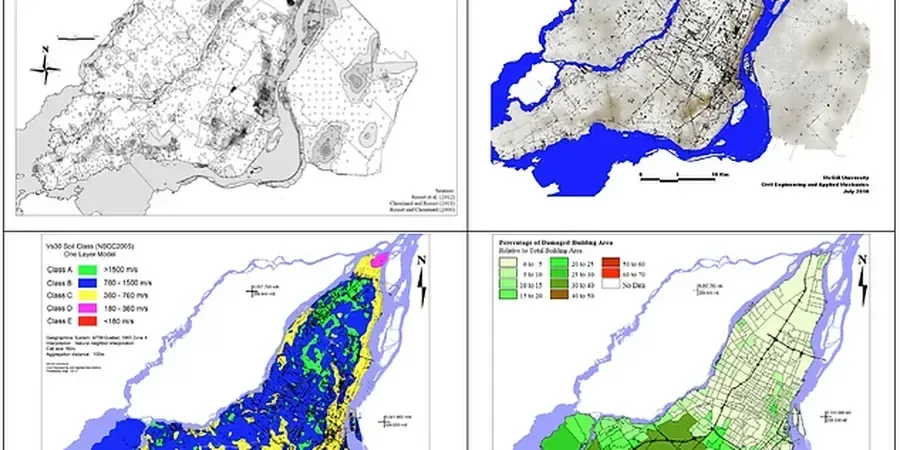
Seismic site assessment in Rancho Cucamonga requires a detailed understanding of the local geology shaped by the Cucamonga Fault zone and the alluvial deposits from the San Gabriel Mountains. Our geotechnical investigation services directly address the City of Rancho Cucamonga’s code requirements, which mandate compliance with CBC Chapter 16 and reference ASCE 7 for seismic design categories. The area’s stratigraphy, characterized by young alluvial fan materials overlying older consolidated sediments, creates a specific risk for ground shaking amplification and liquefaction, making a thorough subsurface exploration essential for any construction project.
We deploy a multi-method approach aligned with ASTM International standards to define seismic site class and ground motion parameters. The core of our methodology relies on Cone Penetration Testing (CPT) for continuous profiling, particularly effective in the granular alluvial soils prevalent in Rancho Cucamonga to estimate liquefaction potential per ASTM D5778. This is integrated with In-Situ like Standard Penetration Tests (ASTM D1586) and shear wave velocity measurements to accurately determine the Site Class (A through F) as required by the code. Our laboratory further refines these classifications through cyclic triaxial or direct simple shear tests on undisturbed samples, providing the critical data engineers need for advanced ground motion analyses.
Typical projects in Rancho Cucamonga, from commercial developments in the Foothill Boulevard corridor to residential subdivisions near the North Etiwanda Preserve, demand rigorous seismic design. For new construction, we frequently perform seismic hazard evaluations that directly inform the structural engineer’s foundation design and lateral force-resisting system. A critical component for the structural fill and grading operations common on these hillside and alluvial fan sites is in-place density verification, which we conduct using the field density test (sand cone method) according to ASTM D1556. This ensures that compacted fills achieve the required relative density to mitigate seismic settlement and instability, a key concern for the city’s plan check process.
The deliverable is a comprehensive geotechnical report containing clear seismic design parameters, including the mapped spectral accelerations Ss and S1, site coefficients, and a detailed liquefaction analysis. Our process, from initial field exploration to final recommendations, is designed to de-risk the permitting phase in Rancho Cucamonga. By integrating grain size analysis and Atterberg limits from our laboratory with field data, we provide a defensible site class designation and practical foundations recommendations that turn complex seismic requirements into a clear, actionable plan for your project.