Road Geotechnics in Rancho Cucamonga addresses the unique subgrade conditions shaped by alluvial fan deposits and the influence of nearby seismic fault zones. Our practice integrates site-specific investigations with Caltrans standards and AASHTO guidelines to ensure long-term pavement performance. A proper flexible pavement design relies on thorough geotechnical evaluation to accommodate expansive soils and variable moisture, while CBR study for road design quantifies subgrade strength directly for structural number calculations.
This expertise supports residential subdivisions, commercial arterials, and industrial logistics centers where settlement or heave can compromise ride quality and safety. For arterial roads and heavy-duty parking areas, rigid pavement design provides a durable alternative when soil conditions demand higher flexural capacity. Every project benefits from a clear understanding of local geology to reduce maintenance and extend service life.
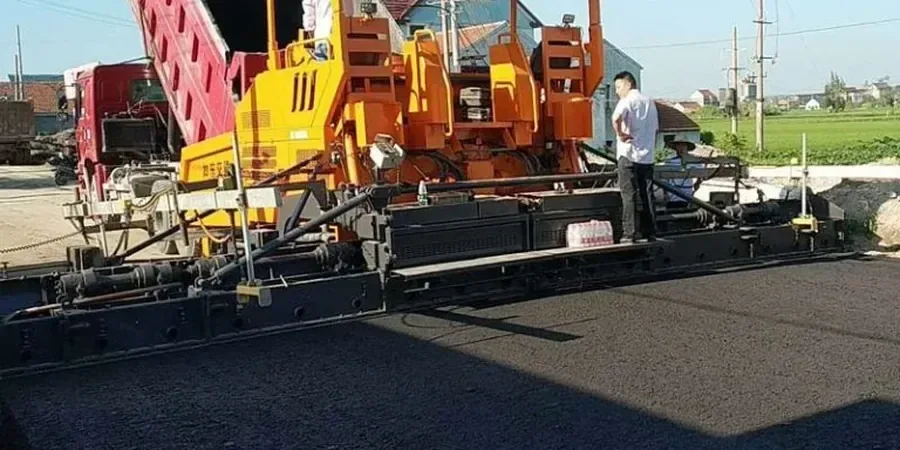
Road geotechnics in Rancho Cucamonga addresses the critical interaction between pavement infrastructure and the underlying ground, shaped by the city’s location at the base of the alluvial fans descending from the San Gabriel Mountains. The near-surface geology here is dominated by young alluvial deposits, consisting of interbedded sands, silts, and gravels with occasional cobbles, which can be prone to differential settlement and scour if not properly characterized. Local practice must align with the City of Rancho Cucamonga Public Works Standards and the latest editions of the California Building Code, which references ASCE 7 for seismic design due to the proximity of active faults like the San Andreas and San Jacinto. A thorough geotechnical investigation is the essential first step to define subsurface conditions, guiding everything from subgrade stabilization to pavement structural design in this seismically active and hydrogeologically sensitive corridor.
Our methodology for road projects relies on a phased field and laboratory program executed in accordance with ASTM and Caltrans standards, the governing bodies for transportation earthworks in the region. Subsurface characterization typically begins with a targeted CPT (Cone Penetration Test) campaign, a preferred method for continuous profiling of alluvial soils, allowing us to identify loose zones and estimate consolidation potential without disturbance. Critical index properties are then confirmed through our laboratory testing suite, where a grain size analysis combining sieve and hydrometer methods quantifies the full particle-size distribution, directly informing drainage and frost-susceptibility classifications. This is complemented by Atterberg limits testing to precisely define the plasticity characteristics of fine-grained soils, a key parameter for predicting shrink-swell behavior and designing lime or cement treatments to create a stable working platform and improved subgrade for the pavement section.
Typical projects in Rancho Cucamonga range from arterial widening along corridors like Haven Avenue to the site development of industrial warehouses and residential subdivisions in the foothills, each demanding a robust understanding of compaction and stiffness. During construction, we perform rigorous In-Situ to verify that engineered fills meet the 95 percent relative compaction requirement standard for structural sections. For shallow utility trenches and base course layers, the field density test (sand cone method) remains the definitive ASTM D1556 procedure for directly measuring in-place density, providing the acceptance data needed to prevent future pavement distress. This integration of advanced exploration with proven construction monitoring ensures that the pavement structure—from the subgrade up through the asphalt or concrete—is supported by a uniform, engineered foundation that resists the cracking and rutting common to alluvial basin settings.
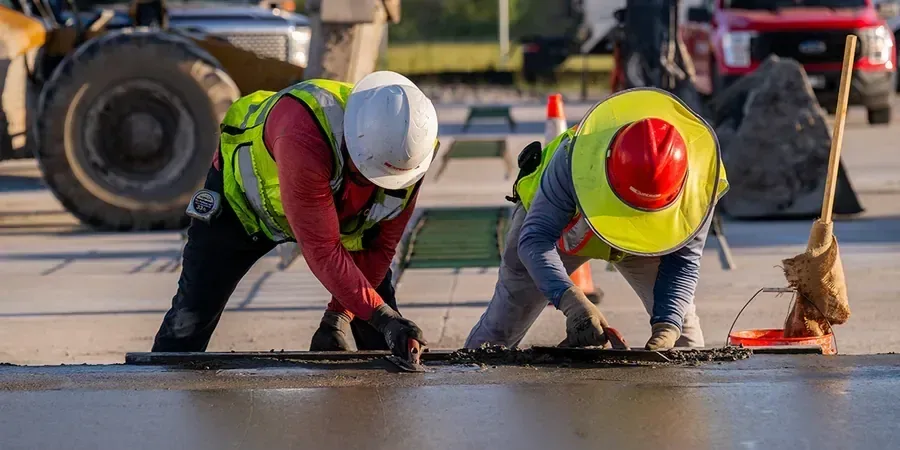
We deliver a clear, phased process that begins with a desktop review and site reconnaissance, proceeds through intrusive exploration and laboratory analysis, and culminates in a geotechnical report with actionable recommendations. Our deliverables include a detailed pavement design, specifying the required Structural Section based on the California R-value of the subgrade, and a complete set of earthwork specifications directly applicable to the contractor’s quality control plan. The value for project owners and civil engineers lies in a single, technically rigorous source that de-risks the ground component of road construction, directly connecting site-specific soil behavior to optimized foundations and pavement designs that extend service life and reduce long-term maintenance on Rancho Cucamonga’s critical transportation network.