Rancho Cucamonga’s transformation from wine country to logistics hub put pressure on every square foot of ground. The alluvial fans spilling from the San Gabriel Mountains hide alternating layers of sand, gravel, and silt that can shift the water table by several feet between seasons. A standard borehole log won’t tell you how fast water moves through those layers. The Lefranc and Lugeon field permeability tests give us direct in-situ measurements of hydraulic conductivity. We run them alongside grain-size data to calibrate the fines content, and often combine results with test-pits to visually verify the strata before placing infiltration basins.
In Rancho Cucamonga’s layered alluvium, a single Lugeon test in fractured bedrock can reveal flow paths that standard logging completely misses.
Scope of work
Area-specific notes
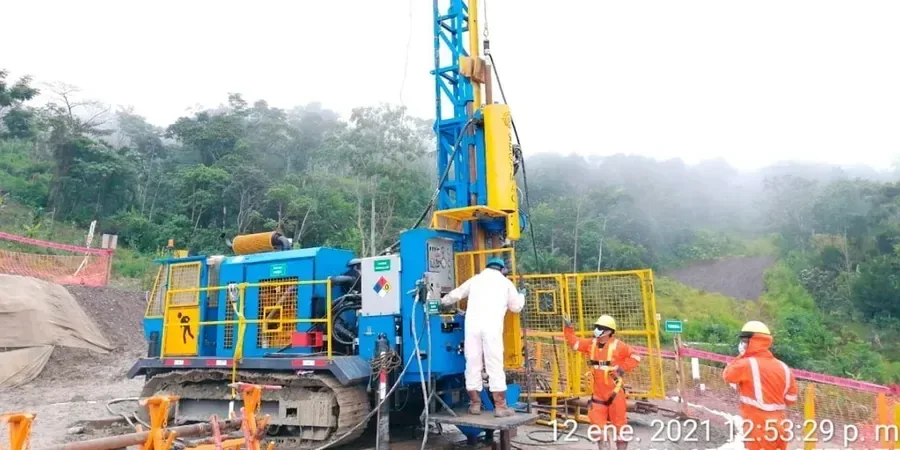
The field kit is simple: a water tank, a calibrated flow meter, pressure gauge, and a packer assembly lowered down the borehole on threaded pipe. Complexity shows up in the setup. If the packer doesn’t seal properly against the borehole wall, water leaks around it and the numbers become worthless. In the cobble-rich deposits common near the Etiwanda Fan, achieving a clean seal takes patience and often a telescopic casing. Our crew monitors flow rate and pressure at one-second intervals, watching for the exact moment when steady-state conditions kick in. Rushing this step inflates conductivity values and undersizes dewatering systems. At a recent detention basin project off Milliken Avenue, a poorly sealed test zone overstated permeability by 40% — enough to change the entire outlet design.
Watch how it works
Standards used
ASTM D6391-11 (Field Permeability by Borehole Methods), USBR 7300-89 (Lugeon Test Procedure), ISO 17025 (Laboratory Calibration of Flow Meters)
Linked services
Lefranc Test (Soil Permeability)
Borehole test for measuring hydraulic conductivity in unconsolidated deposits. Ideal for infiltration galleries, stormwater basins, and dewatering design in the alluvial fan environment.
Lugeon Test (Rock Mass Permeability)
Pressurized water test in fractured bedrock to quantify joint permeability. Required for tunnels, deep shafts, and slope drainage assessments near the San Gabriel foothills.
Typical parameters
Common questions
What does a field permeability test cost in Rancho Cucamonga?
A single Lefranc or Lugeon test typically ranges from US$620 to US$1,060, depending on borehole depth, number of test intervals, and whether a drill rig must be mobilized separately. Sites with difficult access or thick cemented layers may push toward the upper end of that range.
When should I choose the Lugeon test over the Lefranc method?
The Lugeon test applies specifically to fractured rock. If your borehole encounters the San Antonio Canyon granodiorite or the Pelona Schist formation, switch to Lugeon. The stepped-pressure procedure measures how fractures open and close under different hydraulic loads, which matters for tunnel inflow estimates and cutoff wall design.
How long does a permeability test take on site?
A single test interval takes roughly 40 to 60 minutes once the packer is set. A full profile with five intervals can be completed in a day. Time varies with depth and how quickly the formation reaches steady-state flow; clean sands stabilize fast, while low-permeability silts may require longer observation periods.