A common mistake we see in Rancho Cucamonga is treating every lot like it's on solid rock just because the surface looks compacted. The city sits on a massive alluvial fan spilling out of the San Gabriel Mountains. That means gravel, sand, and silt lenses are layered unpredictably beneath the surface. A footing sized for 2,000 psf might settle differentially if it straddles a loose lens the next-door neighbor didn't encounter. We've reviewed projects where the architect assumed uniform bearing, but the footings subgrade varied by over 30% within the same building footprint. Our shallow foundation design service starts with a forensic look at the actual soil profile under your slab, not a generic presumptive value. We size, reinforce, and detail footings and mats so the structure behaves as one unit, controlling both total and differential settlement from day one.
Uniform bearing doesn't exist on an alluvial fan. We design shallow foundations that work with the layering, not against it.
Scope of work
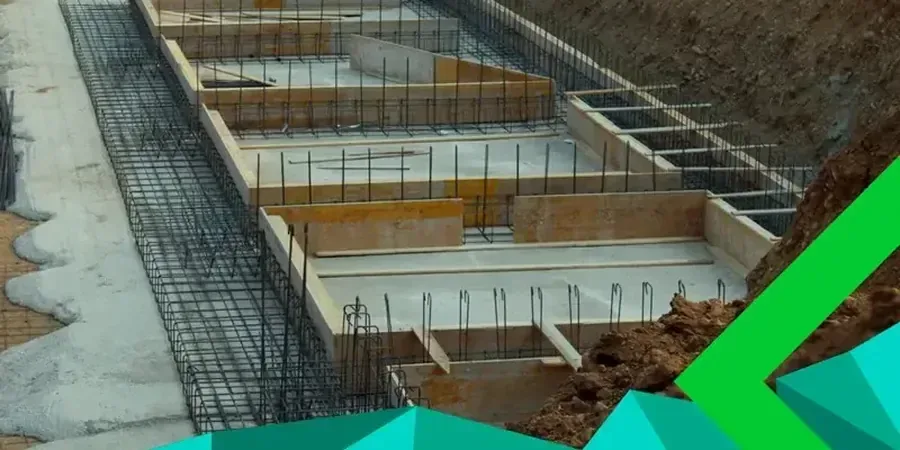
Area-specific notes
The contrast between northern Rancho Cucamonga and the older southern neighborhoods is stark when it comes to foundation risk. Up near the foothills, you're dealing with coarse fan deposits that drain well but can hide boulders big enough to deflect a footing excavation. Down south toward the historic Route 66 corridor, finer-grained soils and occasional clay lenses introduce shrink-swell potential. A footing designed for the north might heave in the south after a wet winter. The biggest liability we see isn't outright bearing failure—it's differential movement that cracks drywall and binds doors. We mitigate this by analyzing soil-structure interaction across the entire footprint, not just at isolated boring locations. Where the profile changes abruptly, we step footings or transition to a stiffened mat to bridge the variability.
Standards used
IBC 2024 (Chapter 18: Soils and Foundations), ASCE 7-22 (Minimum Design Loads and Associated Criteria), ASTM D1586-18 (Standard Test Method for SPT and Split-Barrel Sampling), ASTM D2487-17 (Classification of Soils for Engineering Purposes), ACI 318-19 (Building Code Requirements for Structural Concrete)
Linked services
Bearing Capacity Analysis
We compute ultimate and allowable bearing pressures using Vesic, Terzaghi, and Meyerhof methods, calibrated to site-specific shear strength and SPT data. Includes groundwater correction and eccentric load checks per IBC 1808.
Settlement Evaluation
Immediate (elastic) and consolidation settlement predictions using Schmertmann and Janbu methods. We map differential settlement across irregular footing geometries and recommend joint locations.
Footing and Mat Reinforcement Design
Flexural and shear reinforcement detailing per ACI 318 for isolated, combined, and continuous footings, plus mat foundations. We size bars, spacing, and development lengths for the specified concrete strength.
Expansive Soil Mitigation Plans
For sites with plasticity index above 15, we design moisture barriers, deepened footings, and lime-treated subgrade layers to minimize seasonal heave. Documentation meets Rancho Cucamonga grading ordinance requirements.
Typical parameters
Common questions
How deep do footings need to be in Rancho Cucamonga?
Per IBC Section 1809.4, footings must extend at least 12 inches below finished grade and below the frost line—which in Rancho Cucamonga is negligible at 5 inches. However, we typically specify 18 to 24 inches minimum embedment to get below the active zone of seasonal moisture fluctuation, especially in the finer-grained soils south of the 210 freeway. If expansive clay is encountered, we may deepen perimeter footings to 36 inches or more.
What does shallow foundation design cost for a typical project?
For a single-family residential or small commercial building in Rancho Cucamonga, shallow foundation design typically ranges from US$1,900 to US$3,290. The final number depends on the footprint size, number of footing types, soil variability across the site, and whether a mat foundation is required. This includes bearing capacity analysis, settlement calculations, and stamped reinforcement drawings.
What soil investigation is required before designing footings?
IBC Table 1806.2 requires a geotechnical investigation for all structures unless the building official determines it's unnecessary. In practice, we need SPT borings or test pits at enough locations to capture the site's soil variability—typically one boring per 2,500 square feet of building footprint, with a minimum of two. Lab testing should include moisture content, Atterberg limits, grain size distribution, and direct shear or triaxial tests on representative samples.